Real-Time Communication: The New Standard
Why Instant Response is No Longer Optional for Customer Experience
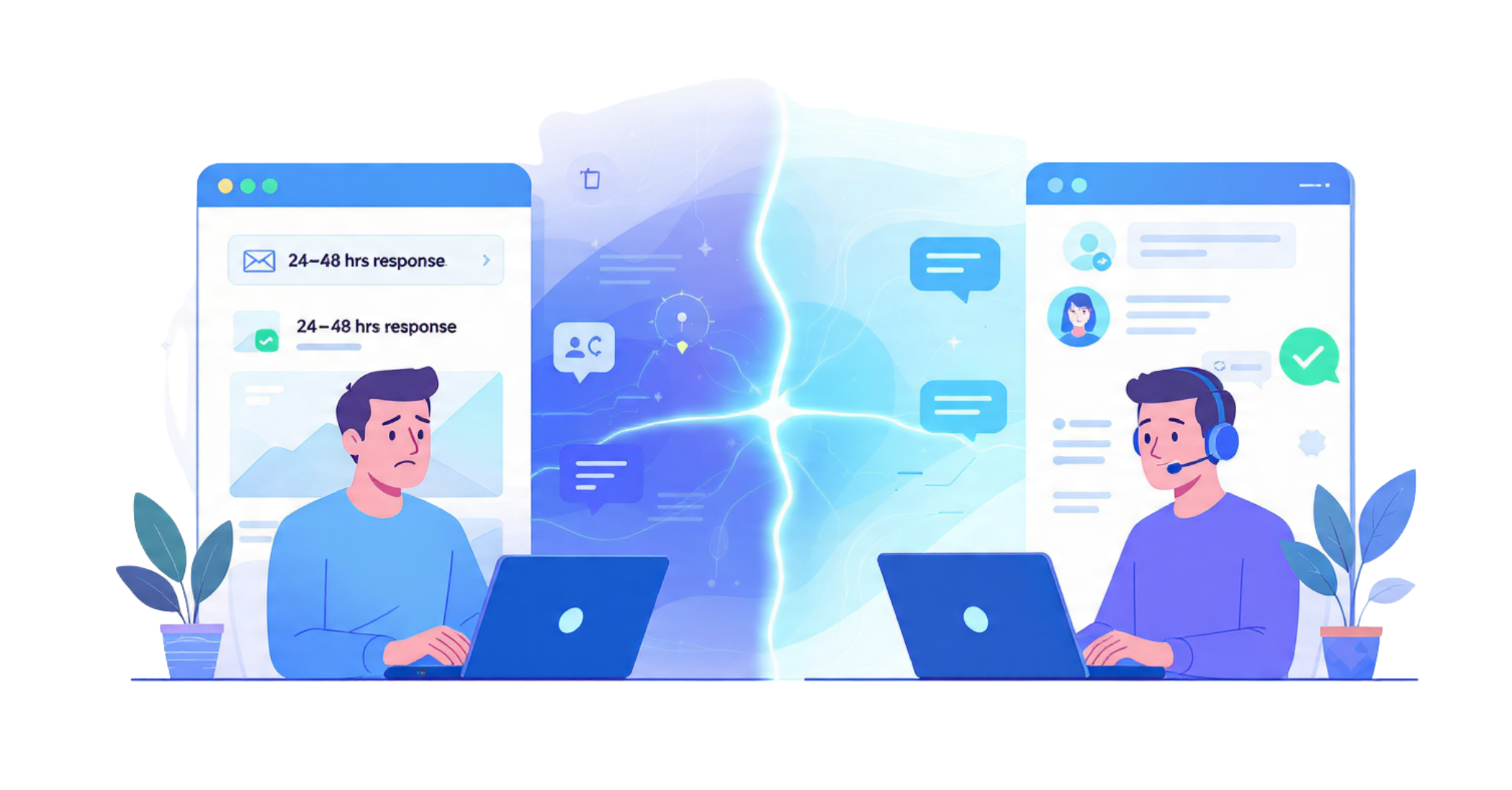
Your customer has a question about their order. They open your website, look for answers, and... wait. They send an email and get an auto-reply promising a response within 24-48 hours. Frustrated, they try calling and sit in a queue.
Meanwhile, your competitor responds to the same query in under two minutes via live chat. Guess who keeps the customer?
The Rules Have Changed
In a world of instant everything—instant messaging, instant delivery, instant gratification—customers expect instant communication. Real-time interaction isn't a luxury anymore. It's the baseline standard for customer experience.
Why Speed Matters More Than Ever
Real-time communication isn't just convenient—it's becoming essential for business survival
Conversion Impact
Responding within 5 minutes makes you 9x more likely to convert leads vs. 30 minutes
Trust Building
Immediate answers make customers feel valued; delays make them feel ignored
Competitive Edge
Customer expectations adjust upward based on the best experience they've had
Revenue Driver
Speed isn't just convenient—it directly impacts your bottom line
The Speed-to-Conversion Reality
The difference between a 1-minute response and a 5-minute response? Conversion rates drop by 400%. First impressions form fast, and response time is often the very first impression customers have of your business.
400%
Conversion DropThe Channels Enabling Real-Time Connection
Modern businesses leverage multiple channels to meet customers where they are with instant responses
Live Chat: The Front-Line Responder
Live chat has evolved from a "nice to have" feature to an essential customer touchpoint. Modern chat systems integrate with your CRM, provide full customer context, and blend human and AI assistance.
- Meets customers where they already are—on your website
- Faster than email, less intrusive than phone calls
- Creates written records of conversations
- Response times measured in seconds, not hours
📈 Business Impact
Conversion rates increase by 3-5x when live chat is available during the buying journey. Customer satisfaction scores improve because problems get resolved in one interaction instead of drawn-out email threads.
Live Chat Performance
3-5x
Higher Conversions< 60s
Average ResponseMessaging Apps: Meeting Customers on Their Turf
Your customers are already on WhatsApp, Facebook Messenger, Instagram, or SMS throughout their day. Smart businesses bring customer service and sales conversations to these platforms.
- Asynchronous communication that respects customer time
- Rich media support for images, videos, and documents
- Familiar platforms customers already use daily
- Personal conversations that strengthen relationships
📈 Business Impact
Message open rates exceed 90% on platforms like WhatsApp, compared to email's 20-30%. Customer engagement increases dramatically when communication happens on familiar, convenient platforms.
Messaging App Impact
Message Open Rates
Video Communication: The Human Touch at Scale
Sometimes text isn't enough. Complex technical issues, product demonstrations, and high-touch relationships benefit from face-to-face interaction—even through a screen.
- Adds warmth and builds rapport through visual connection
- Screen sharing for visual guidance and demonstrations
- Richer communication through body language and tone
- Real-time collaboration and immediate Q&A
📈 Business Impact
Complex issues get resolved faster with video support, reducing support ticket volume and customer frustration. Sales cycles shorten because video meetings feel more substantial than phone calls but don't require travel.
Video Communication
65%
Faster Resolution40%
Shorter Sales CyclesSocial Media: Public Expectations, Real-Time Pressure
Customers increasingly turn to social media for customer service—sometimes for convenience, sometimes believing public visibility will accelerate response times.
- Immediate response expectations with public accountability
- Social listening tools for monitoring at scale
- Public brand reputation building through visible support
- Community engagement and relationship building
📈 Business Impact
Responding quickly and effectively on social media builds brand reputation publicly. Every resolved issue is a visible demonstration of your customer commitment. Speed and quality both matter intensely in this channel.
Social Media Impact
15m
Expected Response Time3x
Brand Trust ImpactThe Technology Powering Real-Time Communication
Modern platforms and integrations make instant communication possible at scale
Unified Communication Platforms
Modern platforms unify chat, email, phone, social media, and messaging apps into single interfaces where agents see complete customer histories.
- Seamless channel switching without starting over
- Complete customer context for every interaction
- Eliminates "let me transfer you" frustration
AI and Chatbots
AI-powered chatbots handle routine inquiries instantly, any time of day, and seamlessly hand off to human agents when needed.
- 24/7 coverage without 24/7 staffing costs
- Immediate responses to common questions
- Human agents focus on complex, high-value interactions
Mobile-First Infrastructure
Real-time communication isn't limited to desktop computers. Your team needs to respond from anywhere—at home, on the road, or between meetings.
- Fast response times from any location
- Immediate engagement with hot leads
- Improved employee flexibility and satisfaction
Business System Integration
Platforms integrated with CRM, helpdesk, and inventory systems give agents instant access to information needed to resolve issues.
- "I can see that right now" instead of "let me check"
- Dramatically improved first-contact resolution rates
- Smooth conversations without delays or holds
Implementing Real-Time Communication Successfully
Follow these strategies to ensure your real-time communication delivers maximum impact
Start with Customer Journey Mapping
Identify the moments when real-time communication delivers the most value. Where do customers get stuck? When do they have urgent questions?
- Prioritize high-impact moments first
- Focus on current frustration points
- Align with customer needs and expectations
Set Realistic Availability Expectations
Real-time doesn't necessarily mean 24/7. Be clear about when live support is available and offer alternatives outside business hours.
- Transparent availability communication
- Clear expectations build trust
- Alternative options for after-hours
Train Teams for Speed and Quality
Real-time communication requires different skills than traditional channels. Teams need to handle multiple conversations while maintaining accuracy.
- Multi-conversation management skills
- Quick responses without sacrificing accuracy
- Brand voice maintenance while working fast
Measure What Matters
Track metrics that reflect real-time communication effectiveness and use this data to continuously optimize your approach.
- Average response time and resolution rates
- Customer satisfaction scores
- Conversation-to-conversion metrics
The Competitive Reality
Here's the uncomfortable truth: while you're reading this, your competitors are implementing real-time communication channels. They're capturing the leads that won't wait for your 24-hour email response.
The Shift is Happening Now
Customer expectations have already changed. The businesses thriving in this environment are those that embrace speed, invest in the right technology, and redesign customer experience around immediacy.
Your customers expect real-time communication because they experience it everywhere else. Meeting that expectation isn't about working harder or hiring massive support teams. It's about leveraging technology intelligently to deliver speed and personalization at scale.
In a world where customers have infinite choices and zero patience, real-time communication isn't just better customer service—it's survival strategy.